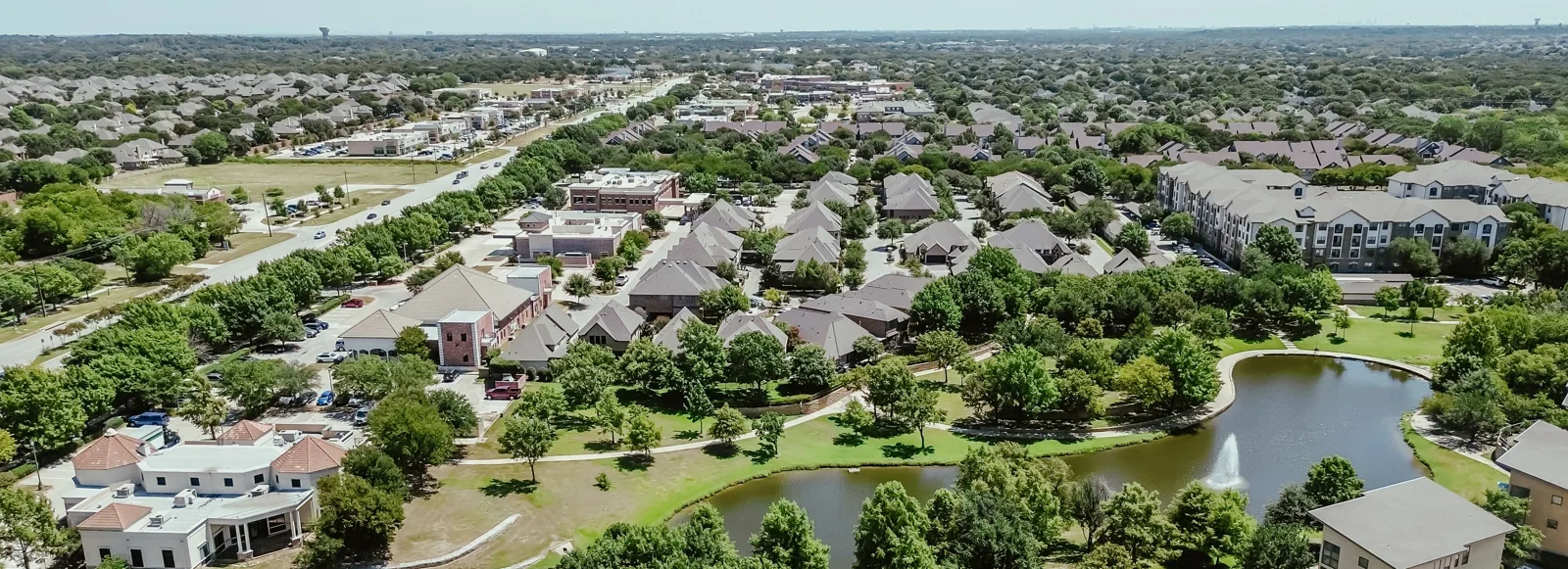
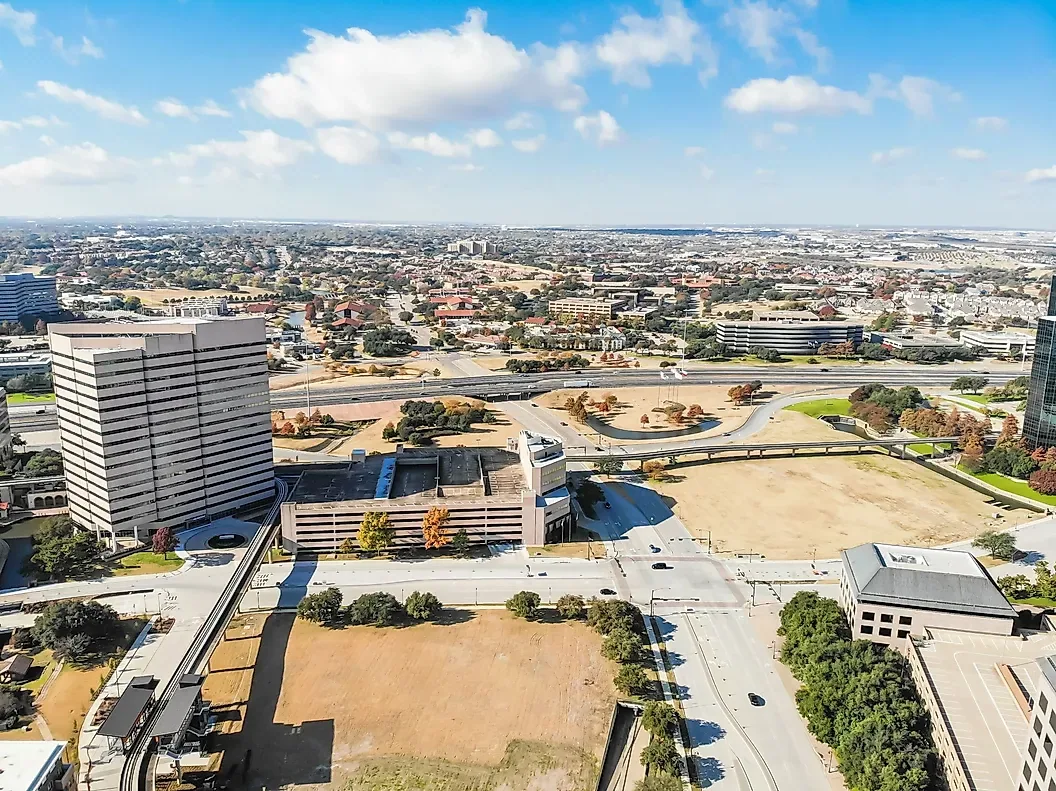
Southlake’s commercial core mixes retail and restaurants with office, hotel, residential, and civic uses. That blend makes access planning as important as the roof detail itself. A restaurant may need exhaust equipment protected; a shop may require an unobstructed customer entry; an office may set quiet hours or security rules. We confirm those requirements with the property manager rather than infer them from a district map. State Highway 114 and Farm-to-Market roads connect the city to the surrounding region, but a nearby Grapevine service area still has a different building and scheduling context. For Southlake, the first step is a property-specific inspection of the roof assembly, leak symptoms, drainage, and safe access.
How does the DFW climate affect roof planning?
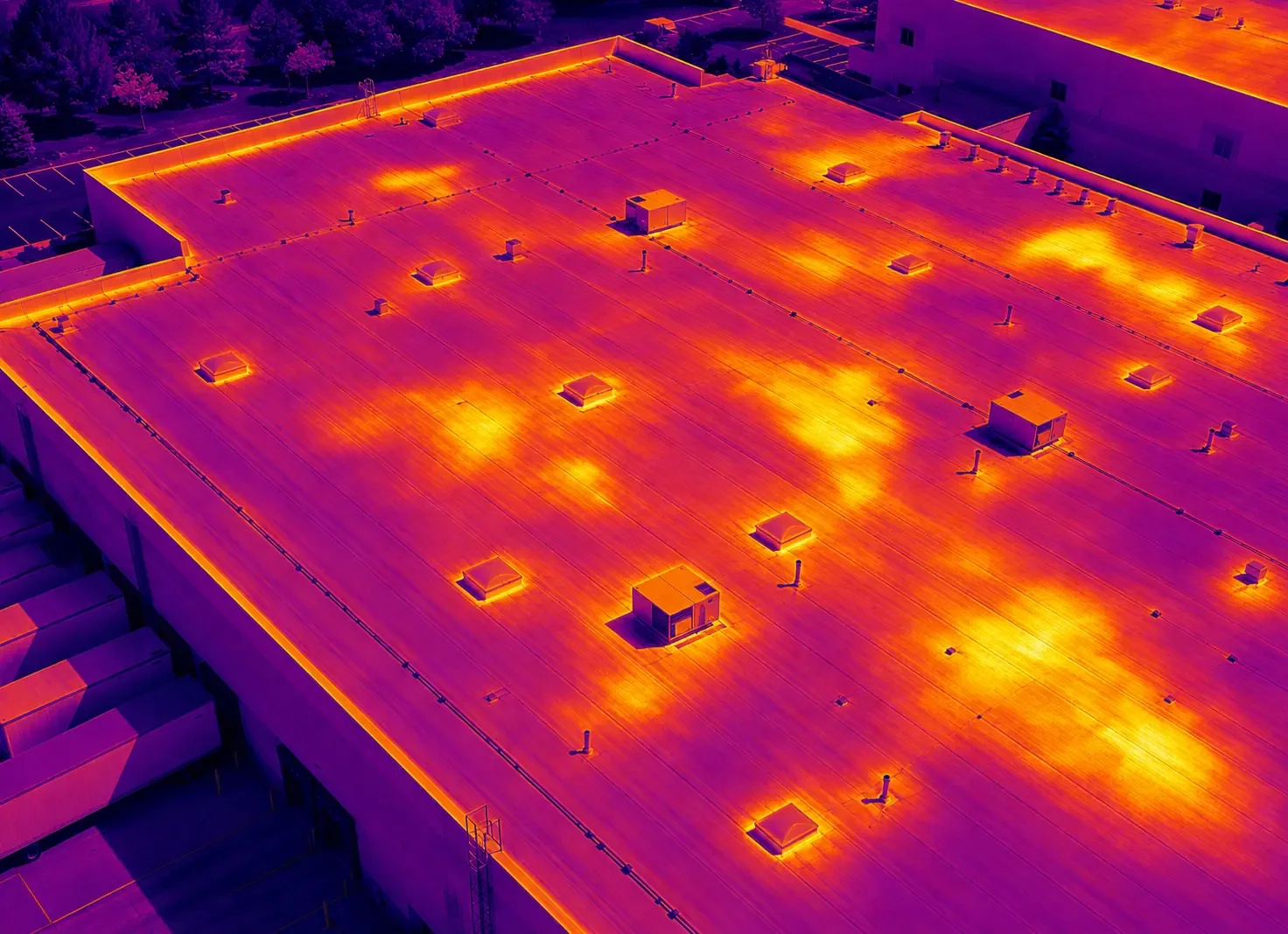
Summer heat, wind-driven rain, hail, and winter freezes create recurring stress across North Texas. The climate classification describes the broader region, not the condition of a particular Southlake membrane. We check seams, edge metal, penetrations, drains, and transitions where movement or water can concentrate. DFW airport normals provide a regional reference for temperature extremes; they do not serve as a site reading. Inspection photos should capture the observed detail and nearby conditions that could influence a repair. When moisture may have entered the assembly, a moisture survey or controlled opening can help define the affected boundary before a crew closes it.
Seasonal planning also benefits from a repeatable inspection route. A manager can group roof sections by access point, note which equipment requires shutdown approval, and leave time for photographs at each transition. In hot weather, the crew should consider safe work windows and material handling requirements. A weather delay should trigger a documented dry-in review rather than an assumption that the roof stayed protected. The report can distinguish urgent exposure from maintenance that can be budgeted, helping the owner prioritize without treating every observation as an emergency.
What operating details matter around the commercial district?
Retail and restaurant properties often coordinate deliveries, waste removal, dining hours, and customer access. Offices may add security checkpoints and limits on roof entry. A hotel or civic facility can have a separate event calendar. We request the owner’s operating schedule, equipment restrictions, and emergency contacts before staging materials. Southlake’s mix around the central commercial district does not mean each building has the same pattern. A roof plan identifies safe walking paths, lift zones, temporary material locations, and entrances that must remain open. Owners comparing a portfolio with Valley Ranch should keep each property’s asset history separate instead of transferring assumptions from one district to another.
What belongs in a useful roof assessment?
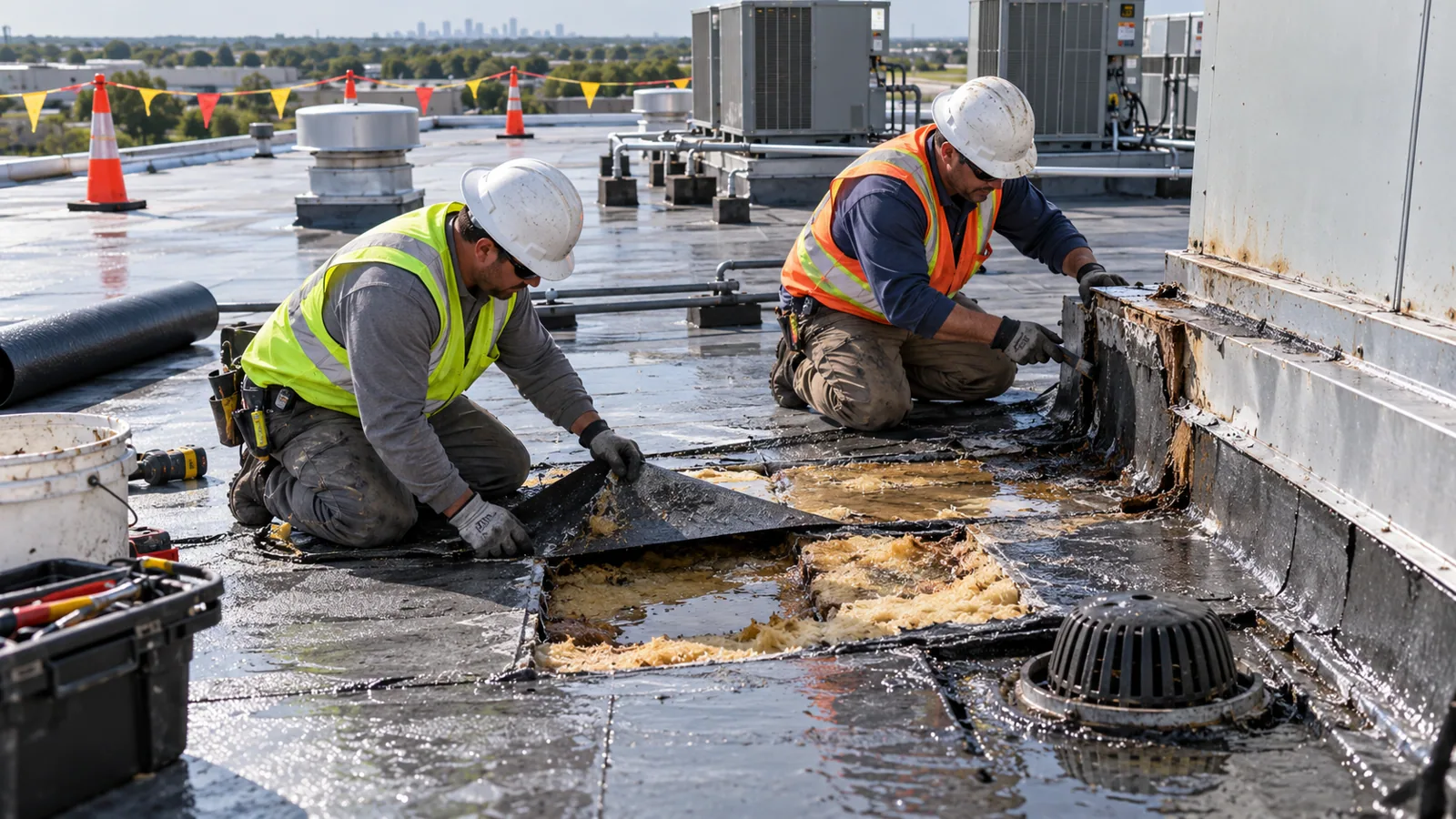
An assessment should connect a reported interior symptom with roof observations, while distinguishing confirmed conditions from likely paths. We inspect the membrane, attachment, transitions, drains, equipment supports, and visible previous patches. If a stain lies below a wall or curb, tracing may require more than a surface look. The report names any test, opening, or area that was not accessed. A commercial inspection can establish a baseline for future maintenance. If the suspected entry is a split at a vertical transition, a flashing detail review checks the tie-in beyond the apparent opening. Photos should show scale and orientation so another manager can find the same location later.
We also ask whether an earlier repair changed the roof assembly. A new coating, overlay, curb, or drain alteration can affect how a later patch should be prepared. Where records are incomplete, a small verification opening may be more reliable than guessing from an aerial image. The owner should know where the opening will be made, how it will be closed, and what decision depends on the result. That sequence is especially useful when the roof supports active mechanical equipment or serves multiple tenants. The written findings preserve the distinction between confirmed construction and an assumption based on appearance.
How do you decide between a local fix and larger work?
A localized repair is appropriate when the opening is bounded and the adjacent material can accept a lasting tie-in. The proposal should identify preparation, compatible materials, patch limits, and any moisture check. Repeated leaks at separate locations or widespread wet insulation can require additional testing or a broader scope. We compare the findings with repair history and remaining service expectations, then explain what evidence supports each option. The commercial roof repair scope can address isolated defects. A replacement evaluation covers larger sections when deterioration is not limited to one detail. Neither the property’s age nor its location alone establishes which option is right.
How can a contractor limit disruption to tenants?
The owner and project lead should agree on daily work zones, access hours, lift placement, noise windows, debris routes, and temporary protection. Retail and dining operations may need walkways kept clear, while an office may require check-in and escort procedures. Before a penetration is opened, the person authorizing the work and the party responsible for dry-in should be named. The schedule can split the roof into manageable areas and identify what happens if weather shifts. For occupied properties, the occupied-building sequence makes these controls visible before mobilization. The plan should also state how the crew will document any condition discovered outside the initial scope.
A practical closeout meeting can review the roof map with the person who will manage the building after the contractor leaves. We identify the repaired location, any area excluded from the work, and photographs that show the finished tie-in. If a future crew needs to cross that section, the owner can share the record and agree on a protected route. This is a useful control for recurring service calls and capital planning. It also prevents a later repair from being scoped against an outdated drawing. The facility team should retain the final report with maintenance and tenant-access records.
What documentation helps with future budgeting?
Closeout records should include before-and-after photographs, repair locations, preparation notes, installed materials, and any test results or limitations. The owner can then compare a later leak with a documented baseline rather than relying on memory. For a Southlake portfolio, use one roof plan and work record per building. Note who approved any field change and whether follow-up remains open. This is especially helpful when retail, office, hotel, or civic facilities use different maintenance calendars. Provide prior proposals, leak logs, roof plans, tenant restrictions, and equipment records before the visit. Commercial Roofing Irving can inspect the affected area, describe the available options, and identify the next action warranted by the observed roof condition.
Commercial Roofing Questions
Can roof work happen during business hours in Southlake?
It can when access, noise, customer routes, deliveries, and interior protection are coordinated with the property contact. The work plan identifies the sections and tasks that may need a different window.
Do Southlake roads identify the roof system at a property?
No. Road access explains regional connectivity, not the membrane or attachment on an individual building. The assembly must be verified during inspection.
What if a leak appears far from the roof opening?
Water may travel before appearing inside. We compare the interior symptom with roof details, drainage, and framing, then recommend testing if the path remains uncertain.
Should a wet area be covered with a patch immediately?
Temporary protection may limit exposure, but the permanent scope should establish the wet boundary and confirm compatible tie-in conditions before closure.
What should a manager send before scheduling?
Roof drawings, prior repair records, leak dates, access rules, operating hours, and known equipment restrictions help us plan an efficient, property-specific assessment.
Ready to review the roof scope?
Request a Roof Assessment
Commercial Roof Flashing Failure Repair
See scope, options and what to expect on the roof.